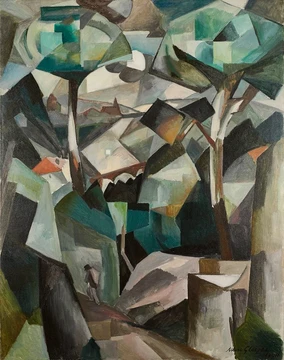
Velimir Khlebnikov
Russian Futurist poet and playwright, inventor of zaum.

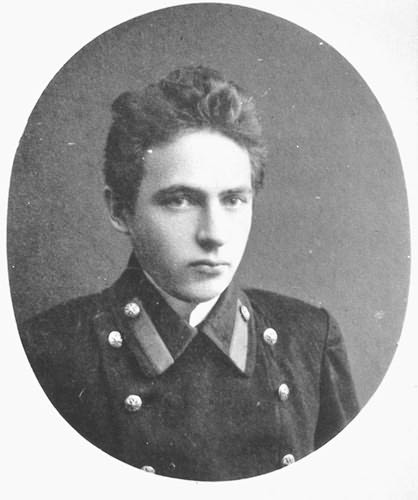
Serge Lachinov (обработка для wiki) · Public domain
Velimir Khlebnikov, born Viktor Vladimirovich Khlebnikov, was a Russian poet and playwright and a central figure of the Russian Futurist movement. His work and influence extend far beyond Futurism, and linguist Roman Jakobson hailed him as 'the greatest world poet of our century.'
- field
- Poetry, Playwriting
- nationality
- Russian
- known_for
- Russian Futurism, zaum language, neologisms, futurological essays
Lore & Background
His younger sister, Vera Khlebnikova, was an artist. He moved to Kazan for school, then to Saint Petersburg, eventually quitting school to become a full-time writer. In 1909–10 he met future Russian Futurists Vasily Kamensky, David Burliuk, and Vladimir Mayakovsky, and soon belonged to Hylaea, the most significant Russian Futurist group, alongside Mayakovsky, Aleksei Kruchenykh, David Burliuk, and Benedikt Livshits. He had already written many significant poems before the Futurist movement took shape, and contemporaries regarded him as 'a poet's poet' and a maverick genius. He was involved in the 1912 publication of A Slap in the Face of Public Taste, a critical component of Russian Futurist poetry. He experimented with the Russian language, inventing huge numbers of neologisms and finding significance in the shapes and sounds of individual Cyrillic letters. Along with Kruchenykh, he originated zaum, a language defying translation. He wrote futurological essays about the possible evolution of mass communication ('The Radio of the Future') and transportation and housing ('Ourselves and Our Buildings'), describing a world of mobile glass cubicles and radio-disseminated knowledge displayed on giant book-like displays. In his final years he became fascinated with Slavic mythology and Pythagorean numerology, drawing up long 'Tables of Destiny' decomposing historical intervals into functions of the numbers 2 and 3.
Reader's Guide
Velimir Khlebnikov's significance lies in his radical linguistic experimentation and his role as a central figure in Russian Futurism. Along with Aleksei Kruchenykh, he originated zaum, a transrational language that defies conventional translation, pushing the boundaries of poetic expression. His neologisms and exploration of the shapes and sounds of Cyrillic letters influenced subsequent avant-garde movements. His futurological essays, such as 'The Radio of the Future' and 'Ourselves and Our Buildings,' anticipated modern mass communication and modular architecture. Linguist Roman Jakobson's praise of Khlebnikov as 'the greatest world poet of our century' underscores his lasting impact on poetry and language theory.
Did You Know?
- He was involved in the 1912 publication of A Slap in the Face of Public Taste, a critical component of Russian Futurist poetry.
Gallery
Frequently Asked Questions
Who is Velimir Khlebnikov?
Born Viktor Vladimirovich Khlebnikov in 1885, he was a Russian poet and playwright who became one of the most radical voices in early twentieth-century literature. He is best known as a driving force behind Russian Futurism and for inventing a speculative language he called zaum.
What is zaum and why does it matter?
Zaum was Khlebnikov's experimental 'super-intellect' language, built from neologisms and phonetic play that deliberately broke conventional grammar and meaning. It remains one of the earliest and most ambitious attempts to use poetry as a tool for reshaping human thought itself.
What was Khlebnikov's role in Russian Futurism?
He served as a central intellectual engine of the movement, pushing its manifesto-level ideas about destroying old language and building a new one. His futurological essays and linguistic experiments gave the group its most radical theoretical backbone.
Why is Khlebnikov considered so important in twentieth-century poetry?
Linguist Roman Jakobson called him 'the greatest world poet of our century,' a testament to how far his influence stretched well beyond the Futurist circle. His work on sound, time, and language anticipated later developments in structuralist linguistics and avant-garde poetics.
When did Khlebnikov live and what happened at the end of his life?
He was born on 9 November 1885 (old style 28 October) and died on 28 June 1922, just seven years after the Revolution that had initially energized his circle. His final years were marked by poverty and illness, and he never saw the full recognition his ideas would later receive.
More in Modernist & 20Th Century Poets 1-18
Related in Modernist & 20Th Century Poets
Links follow this subject's own source article.
Spotted an error? Know more?
This is a living reference — every entry is fact-audited, and reader corrections feed straight into our audit queue. Suggest an edit · See this site's audit record