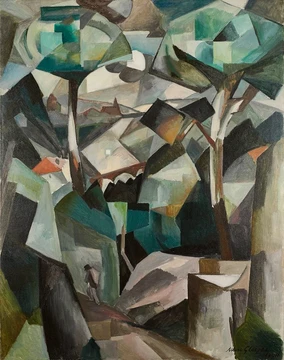
Saint-John Perse
French poet-diplomat awarded the 1960 Nobel Prize in Literature.

via Wikipedia: Saint-John Perse · see source
Saint-John Perse was the pseudonym of Alexis Leger, a French poet, writer, and diplomat awarded the 1960 Nobel Prize in Literature. He is known for his soaring flight and evocative imagery, which in a visionary fashion reflects the conditions of our time. His poetry draws heavily on his childhood in Guadeloupe and his experiences as a diplomat in China.
- born
- 31 May 1887
- died
- 20 September 1975
- field
- Poetry, diplomacy
- nationality
- French
- known_for
- Nobel Prize in Literature (1960), epic poem Anabase, pseudonym Saint-John Perse
Verified Timeline
Lore & Background
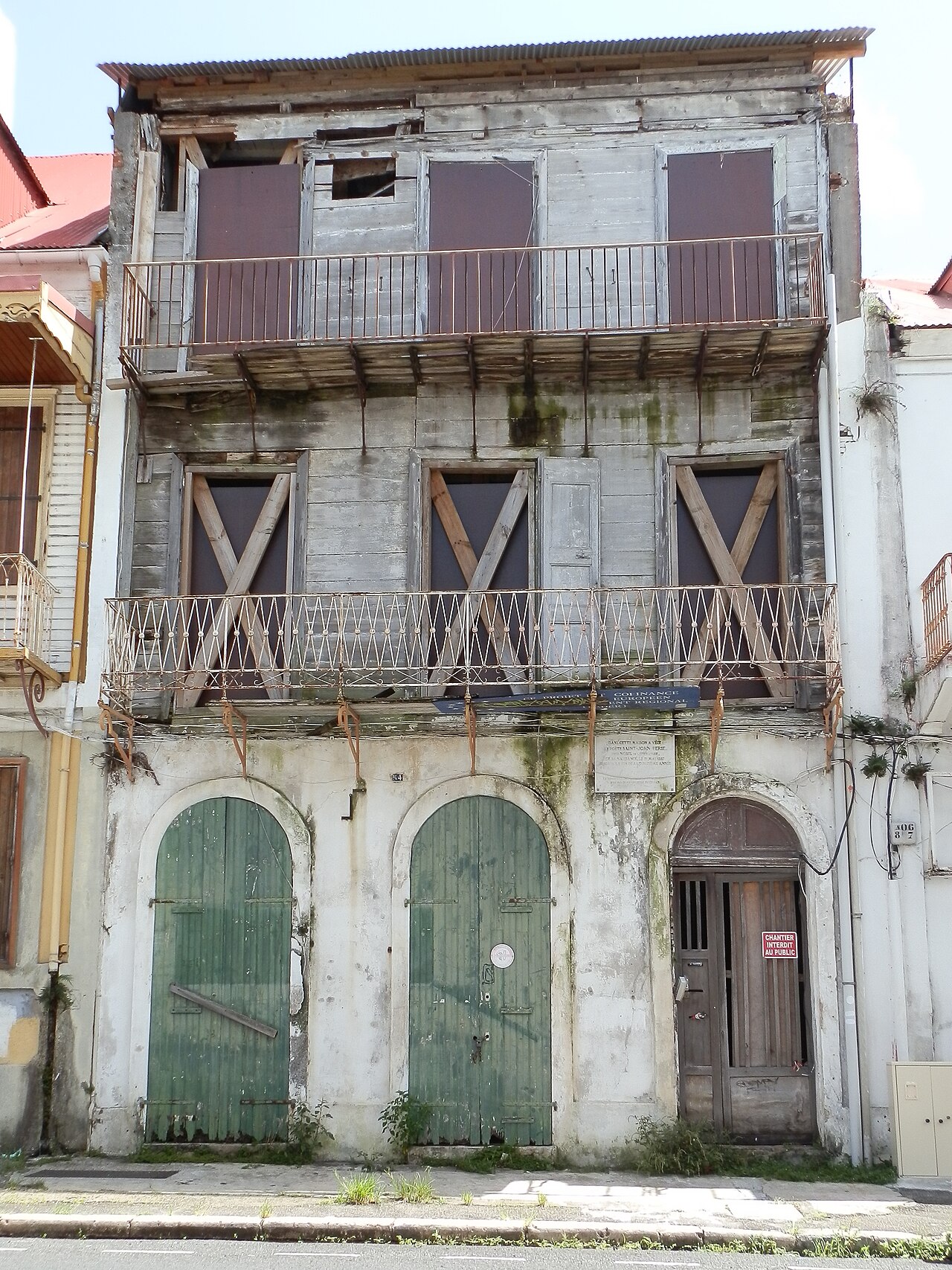
Alexis Leger was born on 31 May 1887 in Pointe-à-Pitre, Guadeloupe, into a family of solicitors who owned a coffee plantation (La Joséphine) and a sugar plantation (Bois-Debout). He described himself as 'the son of a French family as only the colonials are French.' After the family returned to metropolitan France in 1899 and settled in Pau, he felt like an expatriate and called himself a 'man of the Atlantic.' He studied law at the University of Bordeaux, worked as a music critic for the Pau-Gazette, and published his first book of poetry, Éloges, in 1910. The collection was almost completely ignored at the time; one of the few writers who paid it any attention was Marcel Proust. In 1914, he joined the French diplomatic service. From 1916 to 1921, he was secretary to the French embassy in Peking, where he lived in a former Taoist temple and traveled across the Gobi desert. During this time he wrote his epic poem Anabase. In 1921 in Washington, D.C., while taking part in a world disarmament conference, he was noticed by Prime Minister Aristide Briand, who recruited him as his assistant.
Reader's Guide
Saint-John Perse's significance lies in his unique fusion of diplomatic service and poetic vision, earning him the 1960 Nobel Prize in Literature. His poetry, particularly Éloges and Anabase, is noted for its soaring flight and evocative imagery, capturing the conditions of his time through a visionary lens. His work often explores themes of memory, exile, and the natural world, influenced by his childhood in Guadeloupe and his travels in Asia. Despite initial obscurity—Éloges was largely ignored except by Marcel Proust—his later recognition cemented his place as a major figure in 20th-century French literature. The scholar Marie-Noëlle Little wrote that the poet's task, he thought, like the scientist's, was to capture the universe and human consciousness while remaining outside of the literacy currents of the time.
Did You Know?
- Saint-John Perse was born Alexis Leger in Pointe-à-Pitre, Guadeloupe on 31 May 1887.
- His great-grandfather, Prosper Louis Léger, a solicitor, had settled in Guadeloupe in 1815.
- The year 1899 was known as the 'year of all dangers' on Guadeloupe due to racial tensions and fears of American seizure.
- He wrote his epic poem Anabase while serving as secretary to the French embassy in Peking from 1916 to 1921.
- In 1921 in Washington, D.C., he was noticed by Prime Minister Aristide Briand, who recruited him as his assistant.
Guadeloupe Roots and the "Man of the Atlantic"
Alexis Leger was born on 31 May 1887 in Pointe-à-Pitre, Guadeloupe. His great-grandfather, Prosper Louis Léger, a solicitor, had settled in Guadeloupe in 1815. His grandfather and father were also solicitors; his father was also a member of the city council. The Leger family owned two plantations, one of coffee (La Joséphine) and the other of sugar (Bois-Debout). St. Léger described his childhood on Guadeloupe as 'the son of a French family as only the colonials are French.' Later on, Léger greatly embellished his family origins by changing his surname to the more aristocratic sounding St Léger-Léger and by claiming that his ancestors were an ancienne noblesse family who had settled in Guadeloupe in the 17th century. The Léger family were well off and Léger had a happy boyhood. Léger was closer to his warm and loving mother than his cold and distant father. The French scholar Marie-Noëlle Little wrote: 'Growing up surrounded by the luxurious fauna and flora of the West Indies, Alexis perhaps could not but develop an interest in nature...' After the Spanish-American War, rumors were rampant that the United States would seize the French colonies in the Caribbean. The year 1899, known as the 'year of all dangers,' was a period of racial tension on Guadeloupe. The Leger family returned to metropolitan France in 1899 and settled in Pau. The young Alexis felt like an expatriate and spent much of his time hiking, fencing, riding horses, and sailing in the Atlantic. His best subjects as a student were the natural sciences. St Léger always felt very close to nature in general, and he had a special interest in ornithology as birds fascinated him. St. Léger had a strong sense of being an outsider in France and called himself a 'man of the Atlantic' who was equally at home on both sides of the Atlantic. Throughout his life, St Léger had a preference for islands and peninsulas over the mainland, which reflected his sense of being an outsider.
Éloges and the Poetry of Lost Paradise
In 1910, Alexis Leger published his first book of poetry, Éloges. The Éloges reflected St. Léger's nostalgia for Guadeloupe. The Éloges concern a quest by the narrator for the 'other shores,' namely outre-mer (a place beyond the sea) and outre-songe (a place beyond dreams). Much of the Éloges are concerned with the lieux de mémoire ('sites of memory') that capture the memories of a past world that no longer exists. At one point, St Léger asks in the Éloges: 'Other than childhood, what was there in those days that is here no longer?' The tone in the Éloges is both dreamy and melancholic as the narrator reflects on his longing for the plantation of his childhood, which is depicted as a paradise lost. The house that St. Léger grew up in is depicted in the Éloges as a decaying ruin as his family's plantation is being reclaimed by the jungle, while all of the books in the family library have rotted away. The autobiographical nature of the Éloges is underscored by a major character in the poems, an authoritarian father who owned the plantation, depicted as having omniscient power over both his family and the plantation. For St. Léger, only poetry endures and allowed him to recapture the memories of a lost world. The front page of the Éloges features the phrase in capital letters 'ÉCRIT SUR LA PORTE' ('Written on the door') and the first poem begins with a description of the door to the plantation house under which the same phrase is written. The door serves literally as an entrance to the house and metaphorically as the entrance to the lost world of St Léger's childhood. The chronotope of the Éloges is one where his family's plantation exists in an idealized world severed from any sense of history, which reflected St Léger's discomfort with the fact that his family owned slaves in the past (slavery was abolished in France in 1848). Several passages in the Éloges imply an incestuous relationship between the father and the sister of the narrator, such as the line 'a man is hard, his daughter tender'; the way that the sister displaces her mother as the principal lady of the household; and references to a deeply shameful family secret that the narrator cannot bring himself to name. The Éloges was almost completely ignored at the time; one of the few writers who paid it any attention was Marcel Proust, who praised St. Léger as a creative young poet.
Diplomatic Service and a Life Between Worlds
In 1914, he joined the French diplomatic service, and spent some of his first years in Spain, Germany and the United Kingdom. When World War I broke out, he was a press corps attaché for the government. From 1916 to 1921, he was secretary to the French embassy in Peking. He had a secret relationship with Madame Dan Pao Tchao (née Nellie Yu Roung Ling), although according to the latter, he was just using her for obtaining information from Peking high society. During his time in Beijing, he lived in a former Taoist temple and 'sat with the philosophers and sages' as he phrased it. Using Beijing as his base, he took trips across the Gobi desert and out to France's Pacific island colonies. St. Léger was fascinated by the Gobi desert, writing to a friend in France that these 'desert expanses have exerted a hold on my thoughts, a fascination which approaches hallucination.' The American poet Archibald MacLeish wrote that in China St. Léger 'learned the art by which a man defends his life from others and even himself.' During his time in China, St. Léger wrote his epic poem Anabase. The Anabase ostensibly concerns an expedition from Beijing through the Gobi desert to reach the sea, which serves as a metaphor, as Little phrased it, 'an expedition beyond human boundaries, symbolizing man's march through time and space and consciousness.' In a letter to André Gide in 1921, he described Beijing as 'the astronomical capital of the world, outside of space, outside of time, and ruled by the absolute.' When ordered to return to France, St. Léger took the longest and most convoluted route as he travelled over the course of three months across the Yellow Sea, the Pacific Ocean, and the Atlantic Ocean in seven different ships. Shortly after his return to France, St. Léger was ordered to go to Washington D.C. to attend the naval disarmament conference. In 1921 in Washington, DC, while taking part in a world disarmament conference, he was noticed by Aristide Briand, Prime Minister of France, who recruited him as his assistant.
Literary Circles and Formative Encounters
In 1904, he met the poet Francis Jammes at Orthez, who became a close friend. He frequented cultural clubs and met Paul Claudel, Odilon Redon, Valery Larbaud, and André Gide. He wrote short poems inspired by the story of Robinson Crusoe (Images à Crusoe) and undertook a translation of Pindar. He published his first book of poetry, Éloges, in 1910. An early success for St Léger occurred in 1912 when he, Larbaud, and Gide were elected to the John Donne Club of London, which sought to encourage innovation in poetry. During a visit to London to celebrate his election to the John Donne Club, St. Léger met the Anglo-Polish writer Joseph Conrad, which greatly encouraged him to pursue a career in poetry. Little wrote about his style: 'The poet's task, he thought, like the scientist's, was to capture the universe and human consciousness while remaining outside of the literacy currents of the time.' In Paris, he got to know the fellow intellectual poet Larbaud, who used his influence to get the poem Anabase published. Gide, who was serving as the editor of La Nouvelle Revue Française, visited St. Léger and asked him if he had any poems to publish. St. Léger pointed to his trunk and stated: 'You may find something in there. Look.' Upon opening the trunk, Gide found Anabase. St. Léger was fond of classical music and knew Igor Stravinsky, Nadia Boulanger, and Les Six. In Parisian intellectual and artistic circles, St. Léger was considered to be rising poet, and he maintained a close friendship with Marcel Proust, whose work he in turn much admired. As Proust worked on the later volumes of his magnum opus À la recherche du temps perdu, St. Léger offered him advice and encouragement. Proust paid St. Léger a tribute in the fourth volume of À la recherche du temps perdu, the ominously titled Sodom et Gomorrah, where two servants, Marie Gineste and Céleste Albart, find the Éloges by St. Léger in the bedroom of the narrator. After reading some of his poems, Céleste states that St. Léger has written riddles instead of poems and tosses the book down in disgust.
Gallery
Frequently Asked Questions
Who is Saint-John Perse?
Saint-John Perse was the pen name of Alexis Leger, a French poet and diplomat born in 1887 and deceased in 1975. He is best remembered for his sweeping, visionary verse and for collecting the 1960 Nobel Prize in Literature.
What is Saint-John Perse's most famous work?
His landmark piece is the long epic Anabase, a verse narrative that braids together personal memory, myth, and political reflection. It is widely regarded as the centerpiece of his entire poetic output.
Why did Saint-John Perse win the Nobel Prize in 1960?
The Swedish Academy recognized his poetry for soaring above the turbulence of his era while staying deeply rooted in it. His work drew heavily on tropical childhood memories in Guadeloupe and years spent as a diplomat in China.
What was Saint-John Perse's real name and why the pseudonym?
His birth name was Alexis Leger, and he adopted the Saint-John Perse pen name early in his literary career. He lived and published under that alias for the remainder of his life.
How did Saint-John Perse's diplomatic career shape his poetry?
His postings in China and other posts exposed him to civilizations and landscapes that fed directly into the imagery and scope of his verse. That cosmopolitan breadth set his work apart from much of his French contemporaries' output.
More in Modernist & 20Th Century Poets 1-18
Spotted an error? Know more?
This is a living reference — every entry is fact-audited, and reader corrections feed straight into our audit queue. Suggest an edit · See this site's audit record