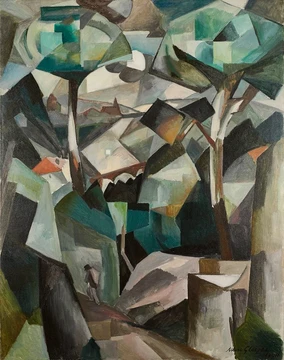
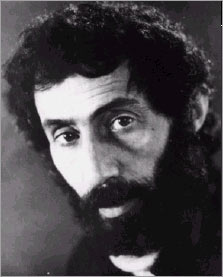
Sohrab Sepehri
Iranian poet and painter of modern Persian verse.

via Wikipedia: Sohrab Sepehri · see source
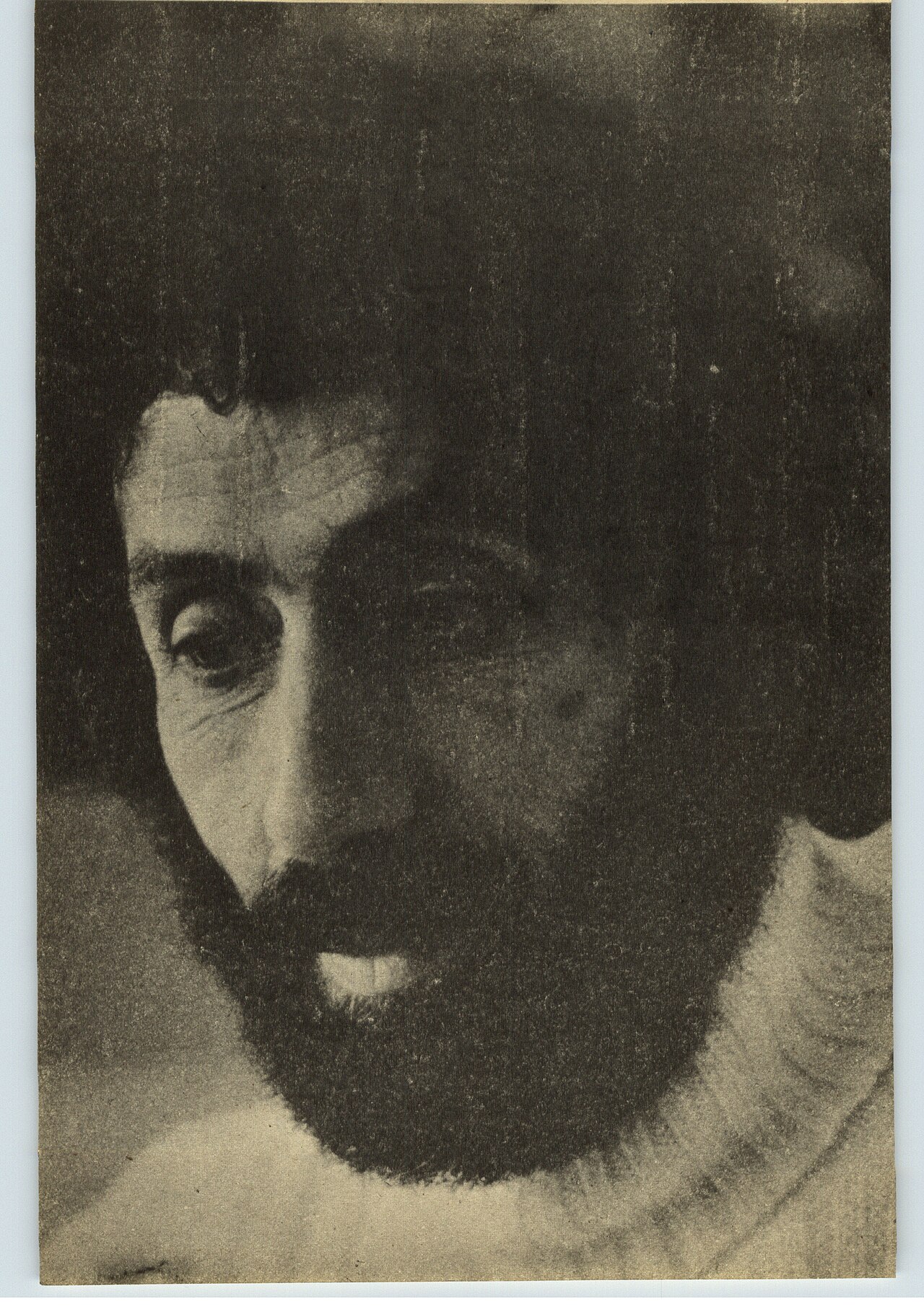
Sohrab Sepehri (7 October 1928 – 21 April 1980) was an Iranian poet and painter, considered one of the five most famous Iranian poets who practiced modern poetry alongside Nima Youshij, Ahmad Shamlou, Mehdi Akhavan-Sales, and Forough Farrokhzad. His poems have been translated into several languages, including English, French, Spanish, Italian, Lithuanian, and Kurdish. He is also recognized as one of Iran's foremost modernist painters.
- born
- 7 October 1928, Qom, Iran
- died
- 21 April 1980, Tehran, Iran
- field
- Poetry, Painting
- nationality
- Iranian
- known_for
- Modern Persian poetry, blending Eastern and Western traditions, and modernist pa
Verified Timeline
Lore & Background
Sohrab Sepehri was born in Qom, Iran, on 7 October 1928, into a family with a longstanding heritage of artistic taste and culture. His grandmother, Hamideh-Banou Zarabi, was a poet whose work was published in periodicals during the late Qajar era and early Pahlavi rule. His father worked in a post office and loved art; his mother also loved poetry and art. When Sepehri was a child, his father suffered from paralysis and died in 1941. He completed elementary and secondary education in Kashan, then moved to Tehran in 1943 to study at a teachers' college. He worked as a teacher for a few years before enrolling in the Faculty of Fine Arts at the University of Tehran, graduating with honors. After a brief stint at an oil company, he published his first collection of poems, 'The Death of Color', followed by 'Life Sleeps'. His paintings were displayed in many European exhibits, and one was sold in Tehran in 2018. He traveled to many European countries, and in Paris he enrolled in a lithography course at the school of Fine Arts. He died of leukemia in Pars Hospital in Tehran on 21 April 1980 and was buried in Kashan. He never married.
Reader's Guide
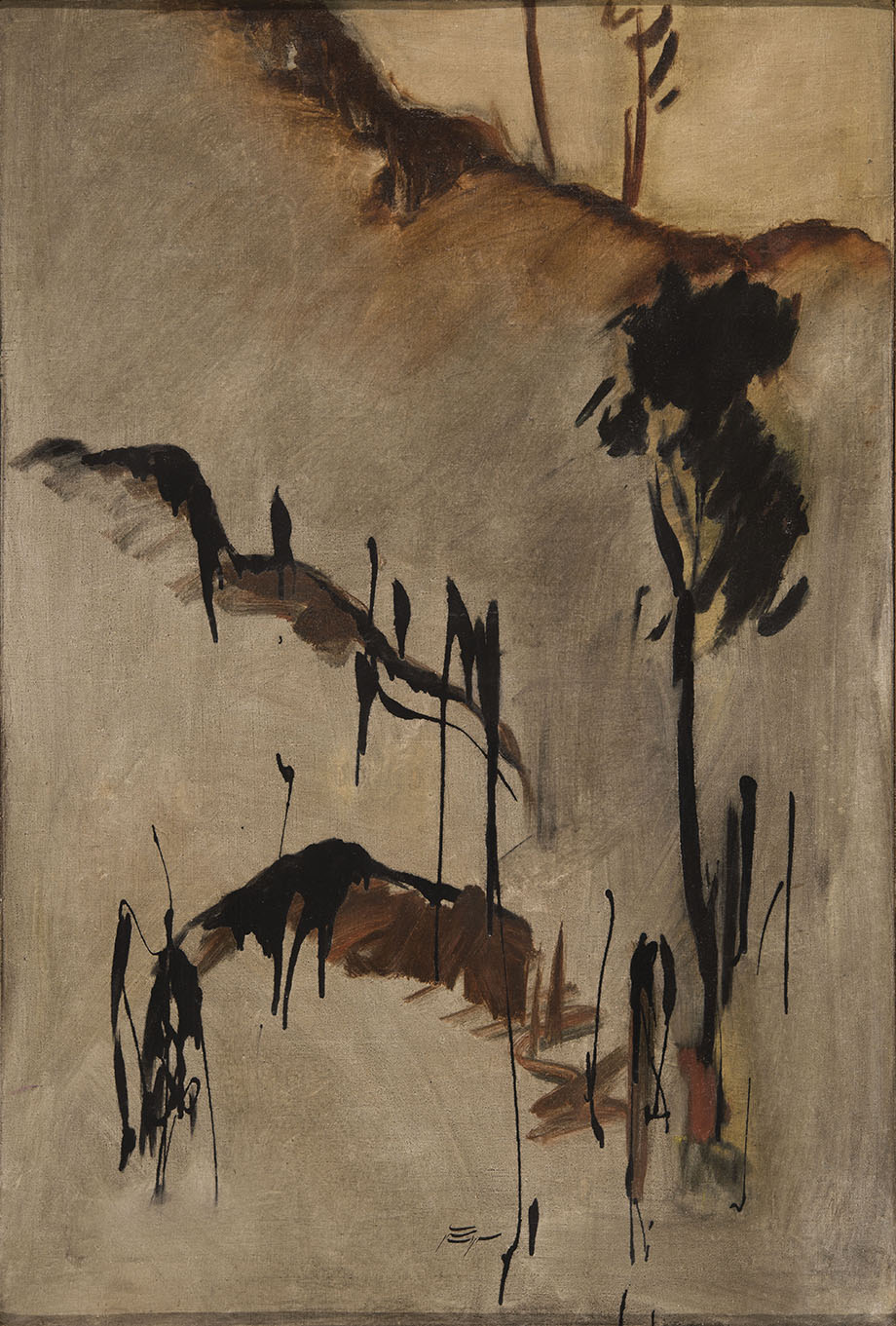
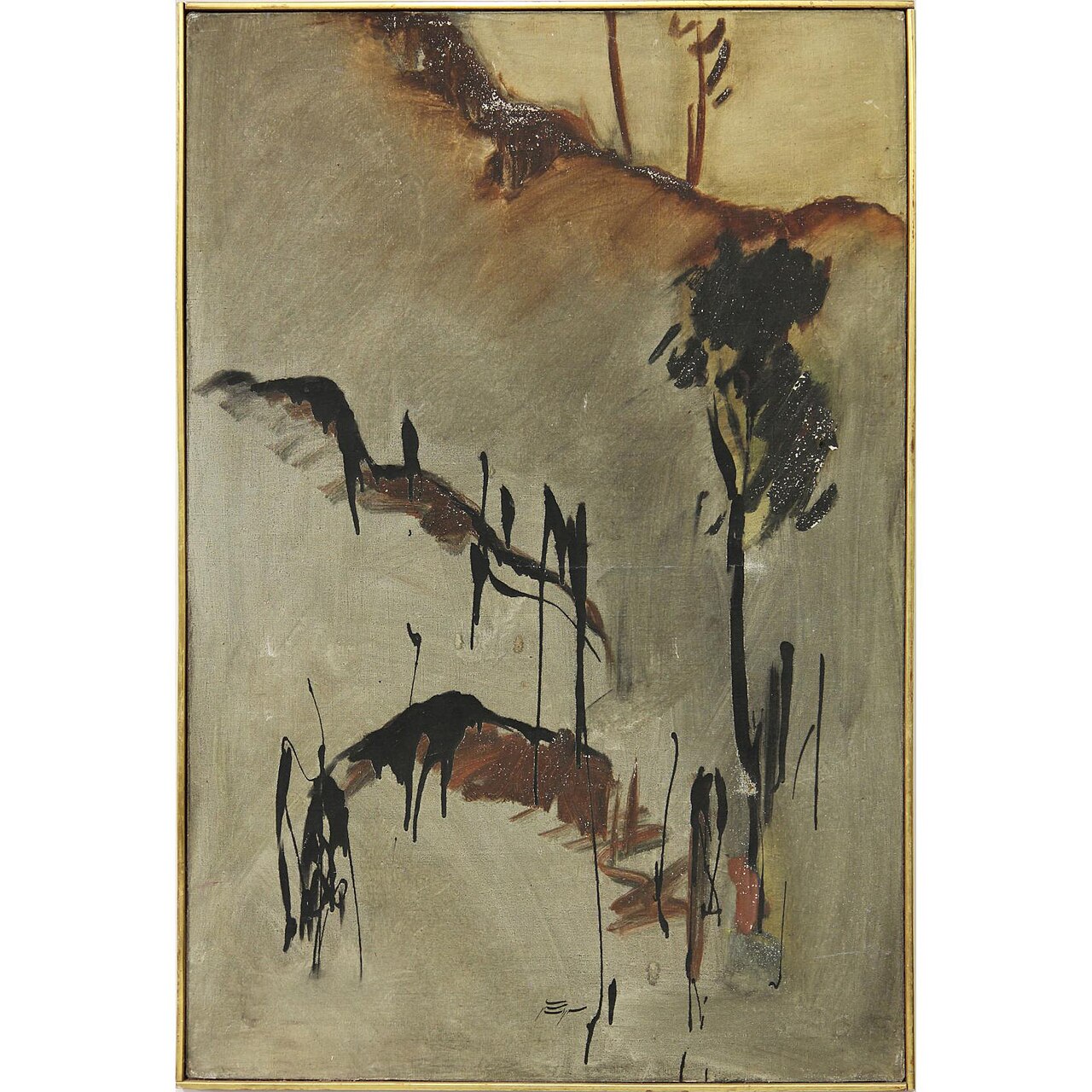
Sohrab Sepehri's significance lies in his unique fusion of Eastern concepts—drawn from Buddhism, mysticism, and Western traditions—with Western poetic techniques, creating an unprecedented style in Persian literature. He used short sentences instead of the long ones traditional in Persian poetry, and his work is noted for its romanticism, symbolism, and evocation of nature through tender, simple language. His poem 'Footsteps of Water' (or 'The Water's Footfall') is a poetic biography with inner and outer aspects, exploring recognition of God through nature. Critic Abdolali Dastgheib believed Sepehri reached great levels in poetic language after later books such as 'The Water's Footfall', 'Traveller', and 'The Green Volume'. His poetry is full of humanity and concern for human values. In painting, he achieved a new technique called Texture, unknown to other painters for a long time, and created most of his art in isolated places like Ghariyeh Chenar and the deserts around Kashan. His comprehensive collection 'Hasht Ketab' (Eight Books) was published in 1976. His work has been translated into many languages, including English, French, Spanish, German, Italian, Swedish, Arabic, Turkish, Dutch, and Russian.
Did You Know?
- Sepehri's grandmother, Hamideh-Banou Zarabi, was a published poet during the late Qajar era and early Pahlavi rule.
- He sometimes worked hanging from tall buildings to wash apartment windows in Paris after his scholarship stopped.
- His poem 'Footsteps of Water' was first translated into English as 'Water's Footfall' by Cambridge University Press in 1986.
- He developed a painting technique called Texture that was unknown to other painters for a long time.
- Sepehri never married, and his grave in Kashan is frequently visited by art lovers.
Roots in a Dynasty of Artists
Sohrab Sepehri entered the world on 7 October 1928 in Qom, Iran, into a lineage where creative expression was as inherited as a surname. The Zarabi family, described as Iran's foremost cultural and literary dynasty, passed down a devotion to poetry and painting through generations. His grandmother, Hamideh-Banou, a poet in her own right, saw her verses printed in periodicals spanning the late Qajar period into the early Pahlavi era. Both parents nurtured artistic sensibility: his father, a post-office employee with a passion for art, and his mother, who cherished poetry and visual culture. Tragedy struck young when his father was struck by paralysis and passed away in 1941, leaving the boy to grieve not only his parent but also his sole childhood companion, his only brother. Sepehri completed his schooling in Kashan before relocating to Tehran in 1943 to attend a teachers' college. He briefly taught, then enrolled in the Faculty of Fine Arts at the University of Tehran, where he graduated with honours. A short stint at an oil company lasted barely eight months before his poetic voice demanded to be heard, and his first collection, The Death of Color, emerged.
A Poetic Language Reborn
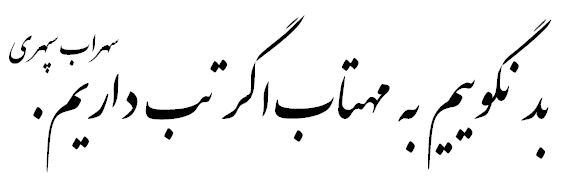
Sepehri's verse shattered centuries of convention in Persian poetry. Where his predecessors relied on long, flowing sentences, he deliberately chose brevity, treating short declarative lines as a vehicle for fresh emotional and philosophical expression. His true innovation lay in synthesis: he wove Eastern spiritual traditions—Buddhism, Sufi mysticism—into the structural grammar of Western literary techniques, producing a hybrid that critics describe as unprecedented in the Persian canon. Romanticism and symbolism became his primary tools, and his objects rarely sat passive; in poems like "Let's not Spoil the Water," elements of the natural world speak directly to the reader rather than being merely described. His long autobiographical poem "Footsteps of Water" (also rendered "The Water's Footfall") operates on two registers simultaneously: an outer biographical narrative and an inner meditation on recognizing the divine through natural beauty. He made clear he performed religious observance not out of blind habit but through a lived, aesthetic encounter with creation. Literary critic Abdolali Dastgheib argued that Sepehri's command of poetic language reached its apex in later volumes such as Traveller and The Green Volume, where personification and layered symbolism create a tenderness that remains distinctive in modern Persian letters.
The Painter's Canvas and the Texture Technique
Beyond his verse, Sepehri carved a reputation as one of Iran's leading modernist painters. After graduating with honours from the University of Tehran's Faculty of Fine Arts, he pursued advanced training abroad: a lithography course at the Paris Fine Arts School, followed by a stint in Tokyo studying lithography and wood-carving. His canvases favoured natural subjects—landscapes, organic forms—and he often worked in solitude, seeking out remote sites such as the Ghariyeh Chenar area and the deserts surrounding Kashan to create his pieces. His paintings were exhibited across Europe, and one work found a buyer in Tehran as recently as 2018. Perhaps his most significant contribution to visual art was a technique he termed "Texture," a method of surface treatment that remained largely unknown to other painters for a considerable period after his development of it. His artistic output was not confined to a single medium or location; he translated Japanese poetry into Persian for the literary magazine Sokhan in 1955, hosted exhibitions in Tehran in 1944 and 1967, and let his visual and literary practices inform one another. The breadth of his creative range—poet, painter, translator, and experimental artist—marks him as a polymath whose influence spans multiple disciplines of Iranian modern culture.
Translations, Final Years, and a Grave That Draws Pilgrims
Sepehri's poetic voice crossed linguistic borders far beyond the Persian-speaking world. His work has been rendered into English, French, Spanish, Italian, Lithuanian, Kurdish, German, Swedish, Arabic, Turkish, Dutch, and Russian. The first English translation of his landmark long poem Seday-e Pay-e Ab appeared in 1986 as Water's Footfall, published by Cambridge University Press and translated by Abbas Faiz and Martin Turner. A separate English selection by Ali Salami followed in 2003. In 1976, Sepehri issued Hasht Ketab ("The Eight Books"), a comprehensive volume gathering nearly all of his previously published poems into a single collection, effectively serving as his definitive poetic statement. His final years were marked by illness; diagnosed with leukemia, he travelled to England seeking treatment but was forced to return to Tehran as his condition worsened. He died on 21 April 1980 at Pars Hospital. Sepehri never married. He was laid to rest in Kashan, the city of his schooling, and his grave has since become a destination regularly visited by art lovers and poetry enthusiasts who come to pay quiet homage to a man whose brief life produced an enduring body of work.
Gallery
Frequently Asked Questions
Who is Sohrab Sepehri?
Sohrab Sepehri was an Iranian poet and painter born in Qom in 1928 who became one of the leading voices of modern Persian verse. He is commonly grouped alongside Nima Youshij, Ahmad Shamlou, Mehdi Akhavan-Sales, and Forough Farrokhzad as a foundational figure of twentieth-century Iranian poetry.
What distinguishes Sohrab Sepehri's poetic style?
Sepehri is known for weaving together Eastern spiritual sensibilities with Western modernist techniques, producing a lyrical voice that feels both deeply rooted and cosmopolitan. His work bridges traditional Persian poetic forms with the experimental impulses of the modernist movement.
What are Sohrab Sepehri's major achievements?
Beyond his poetry, Sepehri is recognized as one of Iran's foremost modernist painters, making him a rare dual-artist figure in the Persian literary world. His poems have been rendered into at least six languages, including English, French, Spanish, Italian, Lithuanian, and Kurdish.
When and where did Sohrab Sepehri live?
He was born on 7 October 1928 in Qom, Iran, and died in Tehran on 21 April 1980. His working life spanned roughly five decades of the twentieth century, placing him squarely in the era of Persian modernism.
Why is Sohrab Sepehri important to world poetry?
Sepehri helped establish modern Persian poetry as a vital part of the global literary conversation, showing that non-Western traditions could engage with modernist innovation without losing their cultural specificity. His multilingual translations have introduced readers across Europe, the Americas, and beyond to a distinctly Iranian modernist sensibility.
More in Modernist & 20Th Century Poets 1-18
Spotted an error? Know more?
This is a living reference — every entry is fact-audited, and reader corrections feed straight into our audit queue. Suggest an edit · See this site's audit record